Distinguished Webinar Speaker: Dr. Ram D. Sriram
We are honored to feature Dr. Ram D. Sriram, Senior Science Advisor at the National Institute of Standards and Technology (NIST), for an upcoming talk on AI metrology and the rigorous measurement and evaluation of reliable and trustworthy AI systems.

Dr. Ram D. Sriram — Senior Science Advisor, National Institute of Standards and Technology (NIST)
Upcoming Talk
AI Metrology: Ensuring the Reliability of Artificial Intelligence
Currently, we are witnessing the “Age of AI,” where artificial intelligence (AI) is playing a major role in every aspect of our lives. As AI permeates our daily lives, the need for rigorous measurement and evaluation of AI systems becomes increasingly imperative.
This talk delves into the emerging field of AI metrology, which aims to establish standardized methods for assessing the accuracy, reliability, and trustworthiness of AI models. We explore various perspectives on AI and discuss the challenges and opportunities associated with quantifying its effectiveness.
By examining specific applications in healthcare and manufacturing, we highlight how AI can enhance metrology practices and contribute to more reliable and trustworthy AI-driven solutions. Key topics include uncertainty quantification, neuro-symbolic computing, and applications of AI for metrology in health care and manufacturing.
Biography
Dr. Ram D. Sriram is a Senior Science Advisor in the Information Technology Laboratory at the National Institute of Standards and Technology (NIST). He previously served as chief of NIST's Software and Systems Division and held research and leadership roles related to manufacturing systems, interoperability, and engineering information systems.
Before joining NIST, he served on the engineering faculty at the Massachusetts Institute of Technology (MIT), where he helped establish the Intelligent Engineering Systems Laboratory. His work spans artificial intelligence, machine learning, engineering informatics, health care informatics, bioinformatics, and related computational systems.
He has authored or co-authored more than 300 publications, including books and videos on artificial intelligence, and has received numerous professional awards for his contributions to engineering, computing, reliability, and information systems.
Key Contributions
- Leadership in AI, software and systems research, engineering informatics, and standards at NIST.
- Research on knowledge-based systems, machine learning, natural-language interfaces, and engineering information systems.
- Contributions to manufacturing interoperability, health care informatics, bioinformatics, and bioimaging.
- Former MIT engineering faculty member and contributor to pioneering collaborative engineering research.
- Author or co-author of more than 300 publications across engineering, computing, and health care.
Recognition
- ACM Fellow
- IEEE Life Fellow
- AAAS Fellow
- ASME Fellow
- IEEE Reliability Society Lifetime Achievement Award, 2023
- IEEE Big Data Security Pioneer Award, 2025
Past Distinguished Webinars
Archive of previous ACM TRUST Distinguished Webinar speakers and talks

Dr. Francesca Rossi — IBM Fellow & IBM Global Leader for Responsible AI and AI Governance, IBM Research
Past Talk
Evolving AI, Evolving Governance: From Machine Learning to Agentic AI
Each wave of AI has brought not just new capabilities but new ethical questions, and each has required governance to be rethought rather than merely extended. Machine learning surfaced concerns around bias, explainability, privacy, and robustness, and led to the first generation of responsible-AI practices: principles, risk assessments, model documentation, and eventually regulation. Generative AI added hallucination, misinformation, provenance, intellectual property, and environmental and labor impacts, straining governance approaches designed for narrower, task-specific systems. Agentic AI now introduces autonomy, delegation, tool use, and multi-agent dynamics, raising questions about accountability, oversight, and human control that cannot be answered by external mechanisms alone. This talk traces that evolution and argues that governing agentic AI requires three complementary layers. The external layer (corporate governance, regulation, standards, and certification) remains necessary but is too slow and too coarse to constrain behavior at runtime. The human-AI interaction layer governs how tasks are delegated, how oversight is exercised, and how appropriate reliance is calibrated. The internal layer embeds values, constraints, and metacognitive control into the AI system's own reasoning and architecture. Together these layers offer a more realistic path to trustworthy AI than any one of them alone..
Biography
Dr. Francesca Rossi is an IBM Fellow and the IBM Global Leader for Responsible AI and AI Governance, based at the T.J. Watson IBM Research Lab in New York. Before joining IBM, she was a professor of computer science at the University of Padova, Italy, for 20 years.
Her research interests span artificial intelligence, constraint reasoning, preferences, multi-agent systems, computational social choice, collective decision making, neuro-symbolic AI, and AI value alignment. She is equally focused on the ethical development and governance of AI systems, particularly for decision-support contexts.
She co-chairs IBM's AI Ethics Board, co-leads the Responsible AI working group of the Global Partnership on AI, and has been a member of the European Commission High Level Expert Group on AI. She has published over 220 scientific articles and co-authored multiple books and edited volumes.
Key Contributions
- Leadership in responsible AI, AI ethics, and AI governance at IBM Research.
- Research in constraint reasoning, preferences, multi-agent systems, and computational social choice.
- Pioneering work on ethical AI development and trustworthy decision-support systems.
- Co-chairs IBM's AI Ethics Board and the Global Partnership on AI Responsible AI working group.
- Former member, European Commission High Level Expert Group on AI.
Recognition
- IBM Fellow — IBM's highest technical distinction
- IBM Global Leader for Responsible AI and AI Governance
- Fellow of AAAI (Association for the Advancement of Artificial Intelligence)
- Fellow of EurAI (European Association for Artificial Intelligence)
- Past President of AAAI and IJCAI
- Editor-in-Chief, Journal of AI Research
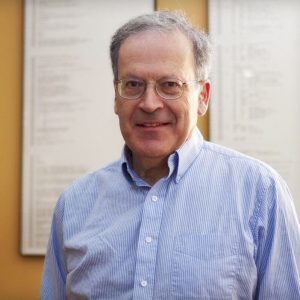
Prof. Leslie G. Valiant — 2010 A.M. Turing Award Laureate, Harvard University
Inaugural Talk
Enhanced and Efficient Reasoning in Large Language Models
In current Large Language Models the production of smoothly flowing prose is understandable in terms of the principles of machine learning. However, there is no comparable principled basis to justify trust in the content of the text produced. The widely recognized phenomenon of hallucinations is just one manifestation of this situation. While instances may be detected and corrected where alternative methods of verification exist, the pervasiveness of hallucinations where those precautions are not taken leads one to wonder about the trustworthiness of outputs in general. It appears to be conventional wisdom that addressing this issue by adding more principled reasoning to large language models is not computationally feasible and hence not an appropriate goal for technology.
Here we describe some new results that indicate, to the contrary, that one can enhance current language models with more principled reasoning, even while retaining much of the current software and hardware base. The method can be interpreted as providing more of a world model, where the individual objects and relations of the world are represented as first-class entities, and not treated indirectly and impressionistically as is current practice. On this model learned or programmed rules can be chained with certain soundness guarantees.
Biography
Prof. Leslie G. Valiant is a pioneering computer scientist whose work has had lasting impact on theoretical computer science, machine learning, and large-scale computation. He currently serves as the T. Jefferson Coolidge Professor of Computer Science and Applied Mathematics at Harvard University.
He received the 2010 A.M. Turing Award for transformative contributions to the theory of computation, including the theory of probably approximately correct (PAC) learning, the complexity of enumeration and algebraic computation, and the theory of parallel and distributed computing.
His research introduced influential ideas that helped define modern computational learning theory and expanded the foundations of algorithmic and systems thinking. His scholarship continues to inspire researchers working across AI, theory, and trustworthy computing.
Key Contributions
- Introduced the PAC (Probably Approximately Correct) learning framework — foundational to computational learning theory.
- Made landmark contributions to counting complexity, including #P-completeness.
- Advanced parallel and distributed computation through the Bulk Synchronous Parallel (BSP) model.
- Produced influential research spanning theory of computation, learning, and intelligence.
Recognition
- 2010 A.M. Turing Award Laureate
- Knuth Prize recipient
- EATCS Award recipient
- Fellow, Royal Society
- Member, U.S. National Academy of Sciences